HACCP Compliance in Ireland: A Practical Guide for Small Food Businesses

HACCP Compliance in Ireland is a legal requirement for all food businesses, regardless of size or location. While the underlying legislation can seem complex, implementing a clear and practical food safety management system is essential for protecting customers and maintaining inspection readiness. However, establishing a robust safety management system is the central part of any successful food enterprise. Irish Environmental Health Officers (EHOs) maintain a vigilant watch over Navan cafés and Cavan catering firms.
Table of Contents
ToggleWhat Is HACCP and Why Is It Mandatory?
Rooted in EU Regulation (EC) No 852/2004, this preventive framework serves as a preventive framework against foodborne illnesses. Every Food Business Operator (FBO) across the Emerald Isle must implement a food safety management system tailored to their kitchen. Irish food businesses are required under EU Regulation (EC) No 852/2004 to implement HACCP-based procedures, with oversight from the FSAI and enforcement carried out by local Environmental Health Officers.

Many business owners struggle to translate complex EU laws into daily kitchen habits. This is where Pelmaro Food Safety Consulting steps in, bridging the gap between legislative jargon and practical management. We ensure your system isn’t just a folder but a living part of your business.
The Pillars of Prerequisite Programmes (PRPs)
Before tackling specific hazards, you must fortify your business with solid Prerequisite Programmes. These foundational steps involve rigorous cleaning schedules and effective pest control measures across your premises. Without these basics, your HACCP compliance in Ireland framework will lack the structural integrity needed to pass a formal inspection.
Waste management and personal hygiene also fall under this critical umbrella of preliminary safety. You must ensure that your staff understands the gravity of cross-contamination during busy lunch rushes. Providing adequate hand-washing facilities and clean protective clothing is not just good practice; it is a fundamental legal requirement.
Mastering Allergen Management and Information
In Ireland, providing accurate allergen information is a cornerstone of consumer trust and legal safety. You are required to identify any of the 14 statutory allergens present in your dishes. Clear communication, whether via a menu matrix or verbal cues, prevents life-threatening incidents for your patrons.
Step-by-Step: How to Achieve HACCP Compliance in Ireland
Meticulous hazard analysis serves as your primary defence against contamination and costly closure orders. You should scrutinise every step of your supply chain, from local Louth deliveries to the final garnish. Identifying Critical Control Points (CCPs) allows you to identify and control risks early.
Establishing precise critical limits is the next milestone in your journey toward a well-managed food operation. Whether you’re chilling high-risk dairy or blast-chilling a hearty Irish stew, temperature precision is non-negotiable. Equipment should be checked and calibrated at appropriate intervals to ensure monitoring procedures remain accurate and reliable.
Effective Monitoring and Corrective Actions
Setting up a monitoring schedule is one thing, but maintaining it during a busy service is another challenge. Pelmaro’s customized safety plans focus on creating streamlined logs that take minutes to complete. This ensures your staff stays focused on the food without ever compromising on essential standards.
When a temperature deviation occurs, your response must be swift and documented with absolute clarity. Corrective actions ensure that potentially unsafe food never reaches the consumer’s table. Maintaining a Corrective Action Log proves to the EHO that you are in total control of your kitchen’s environment.
Advanced Record-Keeping for Irish Food Businesses
Consistent record-keeping distinguishes a top-tier establishment from one destined for a formal warning. You should maintain daily logs for refrigeration and corrective action records to prove your proactive stance. These digital trails demonstrate your unwavering commitment to food hygiene standards and consumer protection.
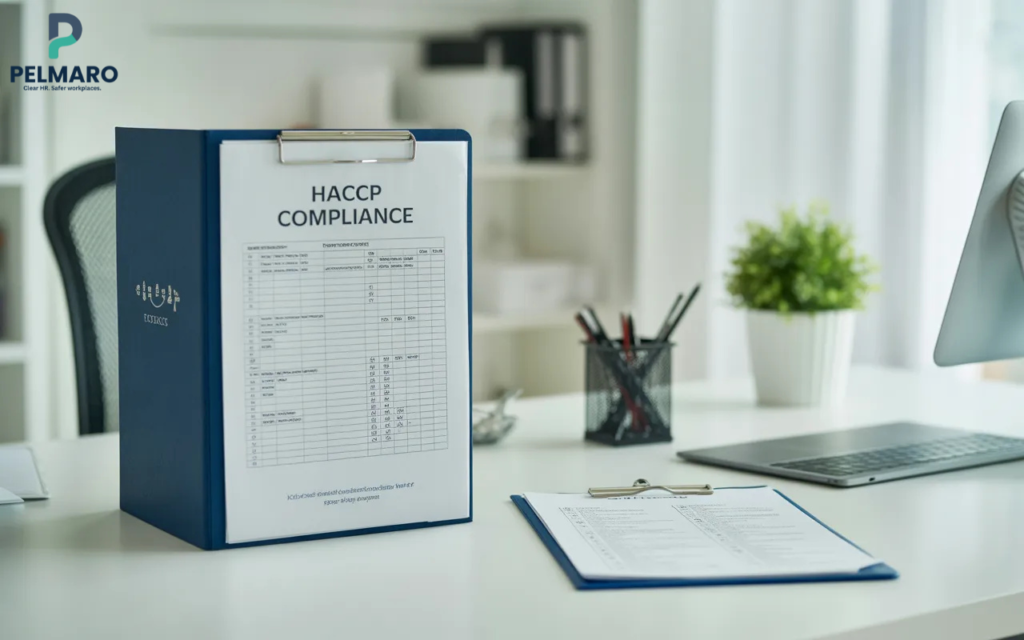
In Ireland, the “Safe Catering Pack” is a common tool, but it must be site-specific. You cannot simply tick boxes without understanding the “why” behind each entry. Digital record-keeping solutions are becoming increasingly popular for Dundalk takeaways to reduce paperwork while maintaining high accuracy and accessibility.
The Role of Staff Food Safety Training
Human error remains the most significant threat to food safety in any bustling Irish kitchen. Ensuring that your team receives appropriate food safety training is an essential part of effective management. Training should be refreshed regularly to keep pace with evolving regulations and best practices.
Category | Requirement | Documentation Needed |
Cleaning | Daily sanitization | Signed Cleaning Schedule |
Temperatures | Fridge < 5°C, Cook > 75°C | Daily Temperature Logs |
Allergens | 14 allergen matrix | Written Allergen Guide |
Training | Induction & Refresher | Training Certificates |
Records | Audit-ready logs | HACCP Compliance Folder |
Conclusion: Food Safety Protects Your Business
Small businesses in Meath rely on a stellar reputation to maintain steady footfall and growth. Adopting HACCP compliance in Ireland ensures you don’t fall foul of the law while protecting your loyal patrons. A proactive internal food safety audit helps you spot documentation gaps before an inspector knocks.
Partnering with experts like Pelmaro simplifies the path to total compliance. We support businesses in preparing for EHO inspections through structured audits and practical guidance, allowing you to operate with the confidence that your business is fully protected. Investing in robust systems today prevents the serious financial consequences of a food safety breach tomorrow.

Get Inspection-Ready: Request Your Bespoke HACCP Consultation Today
FAQ's
- Yes, every Irish food business, regardless of scale, must operate under a tailored safety system.
- It is a resource provided by the FSAI designed to help small caterers manage their documentation.
- Food safety records should be retained for an appropriate period based on your business type and risk profile. Many businesses retain monitoring logs for at least one year, but longer retention may be advisable depending on insurance and operational requirements.
- Yes, under the FSAI Act 1998, a closure order can be issued if a grave risk exists