EHO Inspections: Why Many Food Businesses Fail and How to Succeed

Environmental Health Officer Inspection Ireland can feel stressful for many Irish SMEs. In reality, most inspections do not fall short because of one major issue. They usually highlight small but repeated gaps in systems and record-keeping. Understanding these common weaknesses allows business owners to prepare in a structured and practical way.
Table of Contents
ToggleThe Real Purpose of Food Safety Inspections
Food safety enforcement operates under the framework of the Food Safety Authority of Ireland (FSAI) Act 1998 and relevant EU hygiene regulations. Inspections are typically carried out by EHOs from the Health Service Executive or local authorities. These inspections are conducted within the national food safety framework overseen by the Food Safety Authority of Ireland.

An Environmental Health Officer Inspection Ireland is not designed to penalise compliant operators. Its purpose is to verify that food is handled safely, HACCP procedures are implemented, and staff are appropriately trained.
Why Food Businesses Often Fall Short
In most cases, shortcomings arise because systems gradually “drift” rather than through deliberate non-compliance.
1. The Documentation Gap
Incomplete records are a major red flag. If monitoring is not recorded, it is generally treated by the officer as not having occurred.
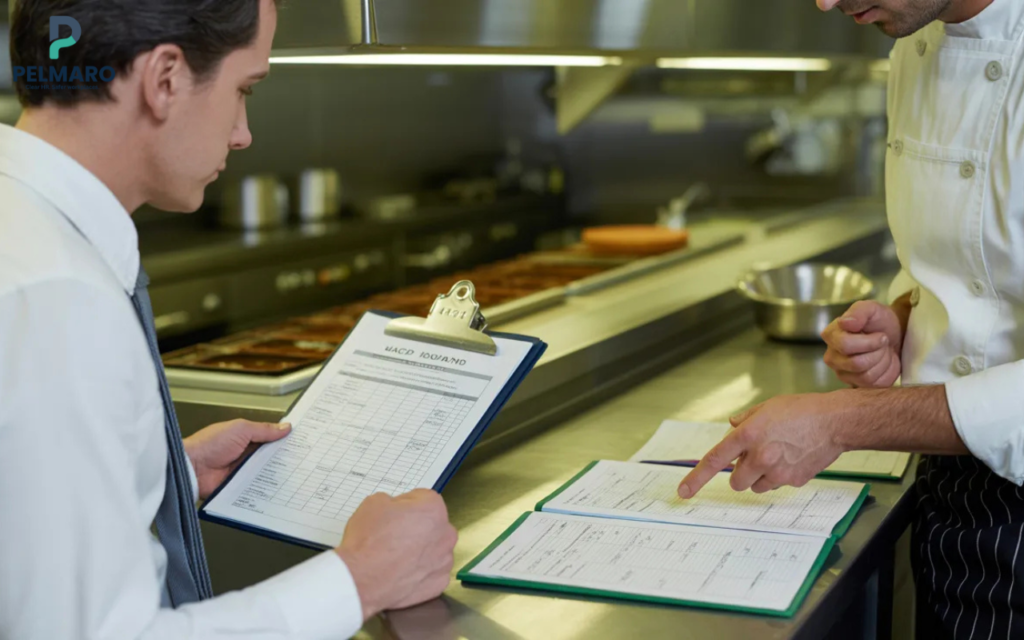
Pro Tip: Assigning clear responsibility and reviewing records weekly can reduce this risk. At Pelmaro, we specialise in Food Safety and HACCP compliance, ensuring your documentation is always audit-ready.
Many SMEs also follow recommendations in our existing EHO inspection guide to maintain audit-ready records.
2. Training That Is Not Embedded
Having certificates on file is only part of compliance. During an EHO inspection in Ireland, staff may be asked to demonstrate correct handwashing or probe thermometer use. If procedures aren’t followed in practice, formal training loses its effectiveness. Clear supervision and documented procedures help ensure training is applied consistently in practice.
3. Minor Structural Issues
Small maintenance concerns like cracked tiles, damaged fridge seals, or leaking taps can pose hygiene risks. Routine maintenance should form part of your business’s ongoing compliance system, similar to how you manage broader Health and Safety (HSA) requirements for your premises.
What Inspectors Typically Focus On
A typical visit will assess three main areas:
- Structural Hygiene: Are walls, floors, and surfaces easy to clean and in good repair?
- Operational Controls: Are chilled foods stored at safe temperatures? Is there proper separation between raw and ready-to-eat foods?
- Food Safety Management Systems: This includes reviewing your HACCP-based records, cleaning schedules, and traceability documentation.
How Enforcement Typically Works

Not every issue results in formal enforcement. Many inspections conclude with written observations. However, repeated or serious breaches identified during an Environmental Health Officer Inspection Ireland may lead to:
- Improvement Notices
- Prohibition Orders
- Closure Orders (Reserved for significant risks to public health).
Conclusion: A Measured Approach to Compliance
Food safety inspections should not be treated as isolated events. Businesses that embed compliance into daily operations typically experience inspections as routine reviews rather than disruptions.
At Pelmaro, we provide structured support for Irish SMEs, helping ensure that your documentation, procedures, and staff practices accurately reflect day-to-day operations. Whether it is HACCP, HR, or Safety, we help you operate responsibly and safely.
Get Your Compliance Health Check Today
Don’t wait for a surprise inspection to find out if your business is at risk. Contact Pelmaro today for a professional consultation and help strengthen your HACCP, HR, and Safety systems and improve inspection readiness.
FAQ's
Typically, an inspection lasts between 1 to 3 hours, depending on the size of the premises and the complexity of the food preparation.
Yes, most routine food safety inspections in Ireland are unannounced to ensure the EHO sees the business operating under normal conditions.
Inspection frequency depends on risk classification, business type, and previous compliance history. High-risk businesses (like full-service restaurants) are usually inspected at least once a year, while lower-risk shops may see an EHO less frequently.
If minor issues are found, you will receive a report with required actions. For serious breaches, the HSE may issue an Improvement Notice or a Closure Order.