HR Compliance Requirements 2026 – Workforce Rules Every Irish Business Must Follow

Understanding HR Compliance Ireland 2026 is crucial for every business owner to avoid legal risks. Companies across Ireland must ensure that their workforce policies, payroll systems, and recruitment practices meet statutory obligations to avoid costly penalties or disputes. Ensuring HR Compliance Ireland 2026 is the top priority for Irish SMEs. From accurate employee classification to timely payroll submissions, every aspect of HR management is under scrutiny.
Businesses that ignore these rules risk fines, WRC investigations, and reputational damage. Implementing clear HR policies, conducting regular compliance audits, and prioritizing employee wellbeing are essential steps for staying inspection-ready. Understanding these requirements helps employers maintain legal protection while fostering a professional, safe, and productive work environment..
Table of Contents
ToggleTable of Contents
Essential HR Compliance Ireland 2026 Requirements for Businesses
2026 is a pivotal year for Irish employers. Employment law updates, stricter enforcement, and greater employee awareness are reshaping workplace expectations. HR Compliance Requirements 2026 go beyond basic contracts and payroll. Authorities now assess intent, consistency, and preparedness.
Many Irish SMEs still treat HR as reactive. That approach no longer works. When inspections happen or complaints arise, missing documentation becomes costly. Proactive HR compliance Ireland protects businesses before disputes ever reach the WRC.
A Deep Dive into HR Compliance Ireland 2026 Standards
HR compliance refers to meeting all statutory obligations related to employment. In Ireland, this includes contracts, pay, working hours, safety standards, and data protection. HR Compliance Requirements 2026 emphasise documented evidence rather than verbal assurances.
Multiple bodies enforce these obligations. The Workplace Relations Commission , Health and Safety Authority, Revenue, and Data Protection Commission each assess compliance differently. Employers must be inspection-ready at all times, not only when issues arise.
| Authority | Area of Oversight | Business Risk |
|---|---|---|
| WRC | Employment rights | Compensation awards |
| HSA | Workplace safety | Prosecution and fines |
| Revenue | Payroll compliance | Backdated tax |
| DPC | GDPR compliance | Regulatory penalties |
Hiring and Recruitment Compliance in Ireland
Recruitment must follow the Employment Equality Acts. Job advertisements, interviews, and selection decisions must remain fair and objective. Employers must also verify the legal right to work in Ireland. HR Compliance Requirements 2026 place strong emphasis on recruitment transparency.
Recruitment records must comply with GDPR compliance Ireland rules. Employers should only retain necessary data and must explain selection decisions clearly. These records often become critical during equality claims or WRC disputes.
Employment Contracts and Legal Obligations
Irish law requires employers to issue written terms promptly. Contracts must clearly outline pay, hours, probation, and notice periods. Under HR Compliance Requirements 2026, vague or outdated contracts increase exposure during disputes.
Contracts must reflect actual working arrangements. When roles evolve, documentation must follow. Employers relying on informal agreements often lose cases despite acting in good faith.
Employee Classification and Workforce Structure
Misclassification remains a major compliance risk. Treating employees as contractors to reduce costs frequently triggers Revenue and WRC investigations. HR Compliance Requirements 2026 target this issue aggressively.
Classification depends on how work is performed, not job titles. Employers must review working arrangements regularly. Incorrect classification affects tax, leave entitlements, dismissal rights, and PRSI obligations.
Payroll, Wages, and Benefits Compliance
When it comes to payroll, HR Compliance Ireland 2026 standards require precise record-keeping. Payroll compliance is non-negotiable. Authorities cross-check payroll records with tax submissions. HR Compliance Requirements 2026 demand accurate wages, compliant payslips, and proper record retention.
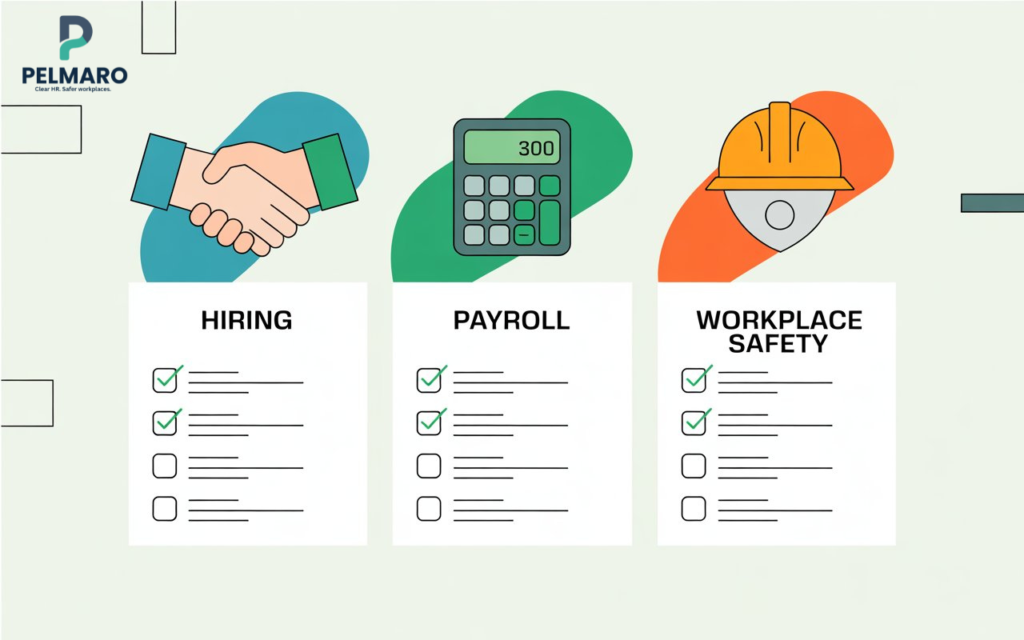
Employers must also prepare for pension auto-enrolment changes. Tracking working hours correctly is essential, particularly for part-time and flexible workers.
| Payroll Area | Legal Expectation | Employer Duty |
|---|---|---|
| Minimum wage | Updated annually | Apply correct rates |
| Payslips | Mandatory format | Clear breakdown |
| PAYE and PRSI | Accurate reporting | Timely submission |
Workplace Health, Safety, and Employee Wellbeing
Every Irish employer must maintain a written safety statement. Risk assessments must reflect real working conditions. HR Compliance Requirements 2026 place greater focus on mental health, stress management, and remote work safety.
Wellbeing is now part of compliance, not a perk. Inspectors increasingly review how businesses manage workload pressure and psychological safety. Ignoring this area exposes employers to enforcement action.
HR Policies and Documentation
HR policies protect employers when issues arise. Policies on discipline, grievance handling, dignity at work, and data protection must remain current. HR Compliance Requirements 2026 require policies to be communicated clearly to employees.Updated policies are a core part of HR Compliance Ireland 2026

Having policies that sit unread offers no protection. Employers must review policies regularly and keep signed acknowledgements. Consistency between policy and practice matters more than wording.
GDPR and Employee Data Protection
Employee data must be stored securely and lawfully. Under GDPR compliance Ireland, employers must limit access and define retention periods. Breaches damage trust and trigger regulatory scrutiny.
Clear procedures and staff awareness reduce risk. Data protection is now a core HR responsibility.
Training, Performance, and Compliance Awareness
Training creates legal protection. Managers must understand basic employment law. Employees must understand workplace expectations. HR Compliance Requirements 2026 prioritise documented training records.
Performance management must remain structured and fair. Clear feedback and written records help resolve issues early and support lawful decision-making if disputes escalate.
Termination, Resignation, and Exit Compliance
Employment exits require careful handling. Fair procedures matter as much as the reason for dismissal. HR Compliance Requirements 2026 reinforce the importance of following WRC Codes of Practice.
Employers must issue correct notice, complete final payroll accurately, and document every step. Poor exit handling is one of the most common causes of WRC claims.
Common HR Compliance Mistakes Irish Businesses Make
Many compliance failures stem from assumptions. Verbal agreements. Outdated policies. Missing training records. These weaknesses surface during inspections. HR Compliance Requirements 2026 penalise poor documentation heavily.
Employment law applies equally to small and large businesses. Size does not reduce responsibility. Prevention always costs less than correction.
Why HR Compliance Is a Long-Term Business Advantage
Strong compliance builds confidence. Managers make better decisions. Employees feel secure. Disputes reduce. HR Compliance Requirements 2026 reward employers who invest early in proper systems.
Compliant businesses attract stronger talent and experience fewer disruptions. HR compliance is no longer administrative work. It is strategic protection.
Conclusion: Building a Compliant and Future-Ready Workforce
Irish employment law will continue evolving. Waiting for enforcement action creates unnecessary risk. HR Compliance Requirements 2026 demand preparation, clarity, and consistency.
Businesses that review contracts, update policies, train managers, and document processes remain protected. Don’t wait for an audit to check your HR Compliance Ireland 2026 status . With expert guidance, compliance becomes manageable rather than overwhelming.
📍 Local HR Support in Ireland

Pelmaro supports small and medium businesses across County Meath, Louth, and Cavan. Whether you need an HR audit in Navan, a safety statement in Dundalk, or payroll compliance advice in Cavan Town, Pelmaro provides practical, inspection-ready solutions.
👉 Contact Pelmaro for a free 30-minute compliance consultation
Get Your HR Compliance Ireland 2026 Checklist & Free Consultation
Don’t leave your business protection to chance. Whether you’re in Navan, Dundalk, or Cavan, we are here to ensure your HR systems are 100% compliant and inspection-ready.
Fill out the form below, and our experts will get back to you within 24 hours.
FAQ's
The 2026 employment law in Ireland updates statutory sick pay, pension auto-enrollment, and strengthens employee rights across hiring, payroll, and workplace safety.
With new EU legislation like the Pay Transparency Directive and updated employment permits coming in 2026, professional HR expertise is more critical than ever to ensure businesses avoid legal penalties and attract top talent
The 2026 HR strategy prioritizes legal compliance, employee engagement, digital HR tools, and training for hybrid workplaces.
The 50/50 rule requires employers and employees to share contributions equally for certain pension or social insurance schemes.
The 11-hour rule mandates employees must have at least 11 consecutive hours of rest between working days.